In the summer of 1911, a nineteen-year-old Englishman walked out of Interlaken with a heavy pack on his back and the Jungfrau massif ahead of him. He would not publish his first book for another twenty-six years. But what he saw in the weeks that followed — in this valley, on these mountains, beneath these peaks — he never stopped seeing.
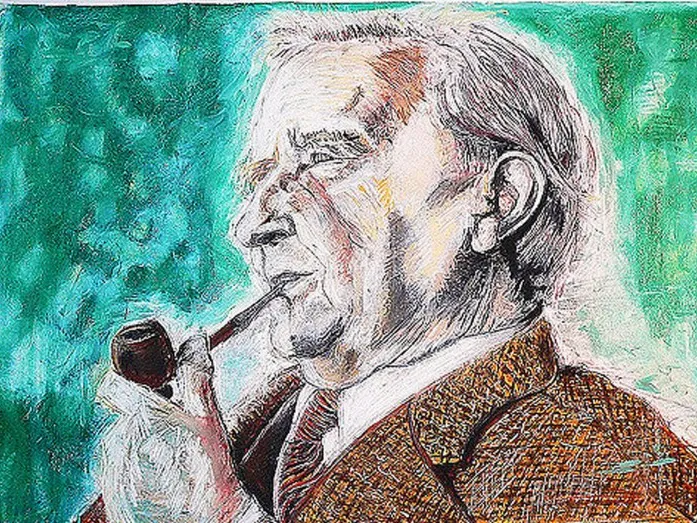
J.R.R. Tolkien & The Origin of Middle-earth
J.R.R. Tolkien arrived in the Bödeli in late July 1911 as part of a walking expedition through the Bernese Oberland. He was nineteen years old, already in love with invented languages and ancient mythology, and about to experience something his imagination would spend the next four decades processing. He walked south from Interlaken into the Lauterbrunnen valley, climbed toward the high passes, and crossed the Bernese Oberland on foot — sleeping in haybarns, carrying everything on his back, nearly dying in a rockfall on the descent.
We know he was here because he signed a guestbook. On 5 August 1911, Tolkien wrote his name at the mountain inn of Obersteinberg, above Lauterbrunnen. That signature — traced by Tolkien scholar Martin Monsch — is the physical proof of a presence that would reshape 20th-century literature.
Fifty-six years after that summer, Tolkien wrote to his son Michael and confirmed what the valley had given him:
“The hobbit’s journey from Rivendell to the other side of the Misty Mountains, including the glissade down the slithering stones into the pine woods, is based on my adventures in 1911.”
The mountains you can see from this clearing are those Misty Mountains. The peak that rises to the east of the Jungfrau — the Silberhorn, at 3,695 metres — became, in Tolkien’s invented Elvish, Celebdil: celeb (silver) + til (point). Silver. Horn. He did not borrow the name. He translated it. Together, The Hobbit and The Lord of the Rings have sold over 150 million copies. The landscape that generated their central geography was here — and almost no one knew it until now.
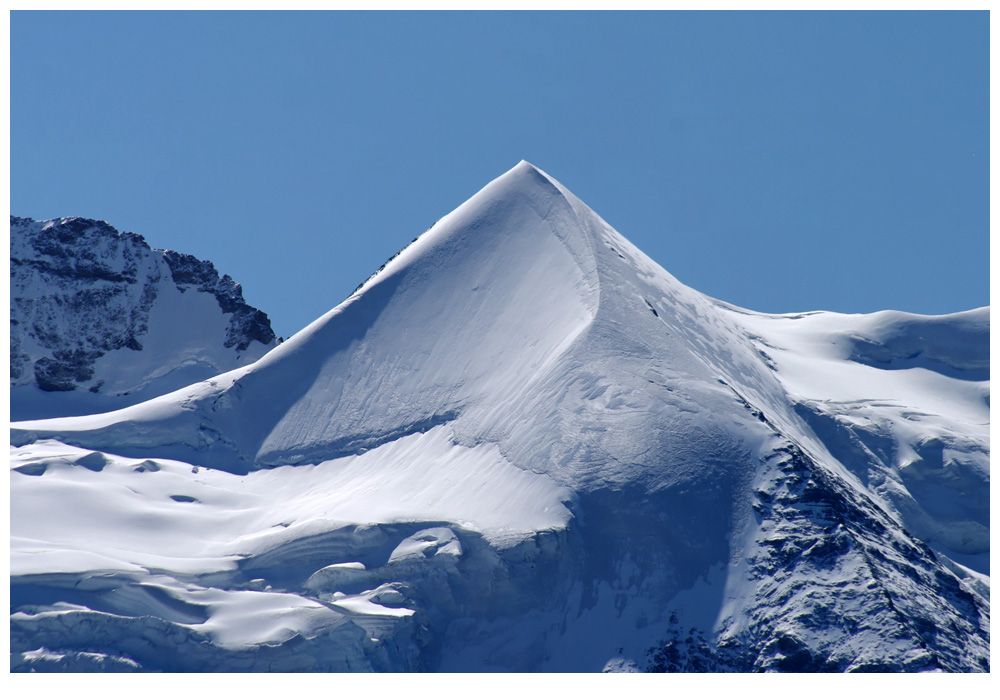
Tokien’s legacy is still very much alive
The global search for Middle-earth’s origins has been going on for decades. It ends here with new revelations, insights and locations that appear in the Hobbit and the Lord of the Rings.
On the Whispering Woods Trail
At Station 4, the clearing opens toward the Jungfrau massif. The peaks are lit silver and cold above the dark treeline. Your app opens a letter — written by a 75-year-old man to his son — that confirms, in one sentence, that what you are looking at is where Middle-earth began. The Silberhorn is in front of you. The letter is in your ears. You are standing inside the memory. His vivid memory….
What to expect
No other place on earth can offer what this clearing offers. The mountains Tolkien confirmed as the origin of Middle-earth are visible from exactly where you will stand. The letter is read aloud. The peaks are named. The full revelation — and everything the valley gave him beyond the mountains — is only unlocked when you are here.
[Book Your Lantern →]